The best solution depends on how you get paid. "Online payments" covers two very different worlds, card payments and account-to-account (pay-by-bank) payments, and they face different fraud, so they need different tools:
- Card / e-commerce fraud (CNP, chargebacks): Stripe Radar, Signifyd, Riskified, Forter, Sift, Kount, SEON.
- Account takeover & identity fraud: Sift, SEON, BioCatch, Fingerprint.
- Bank-side transaction monitoring: Feedzai, Featurespace, ACI Worldwide.
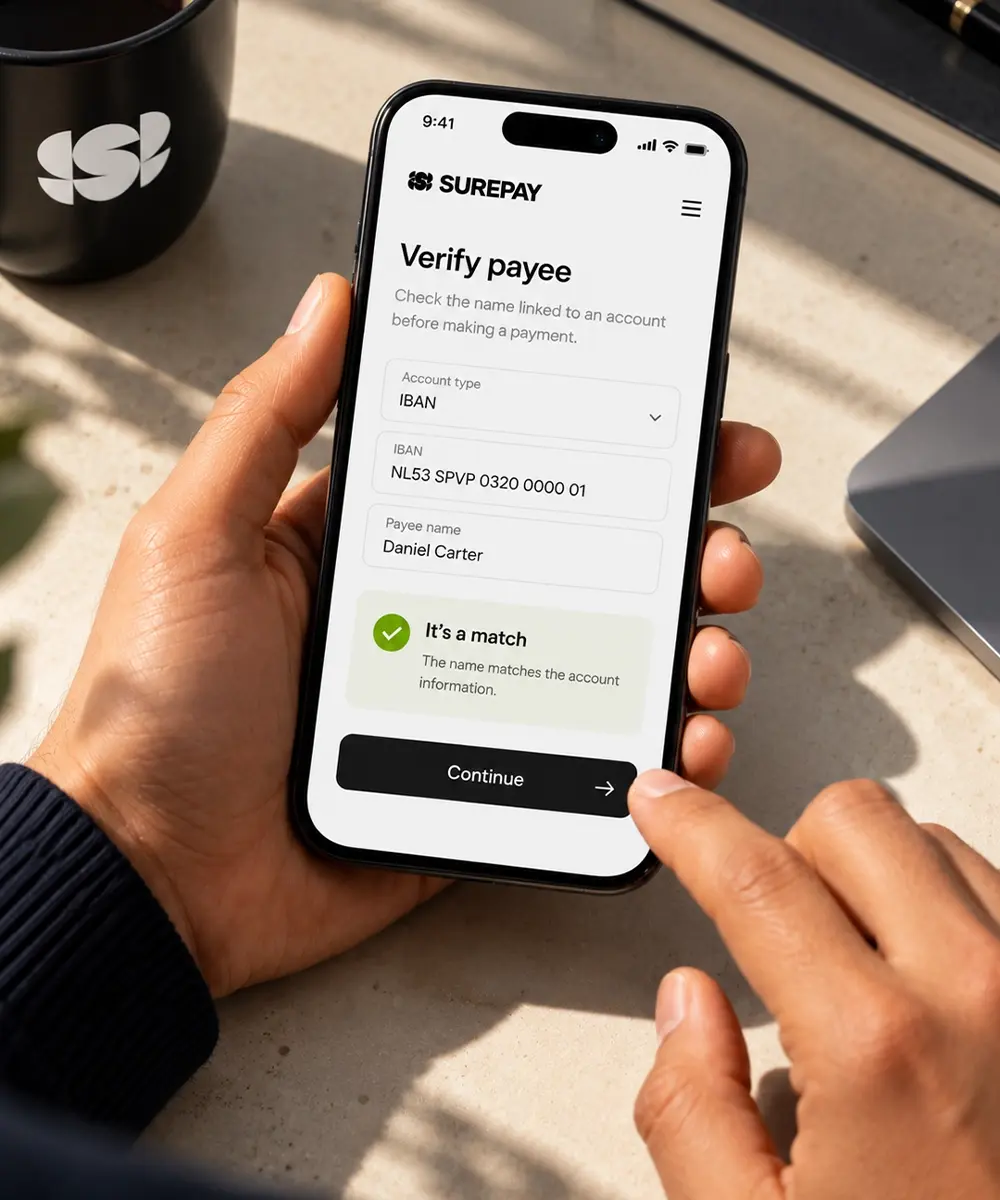
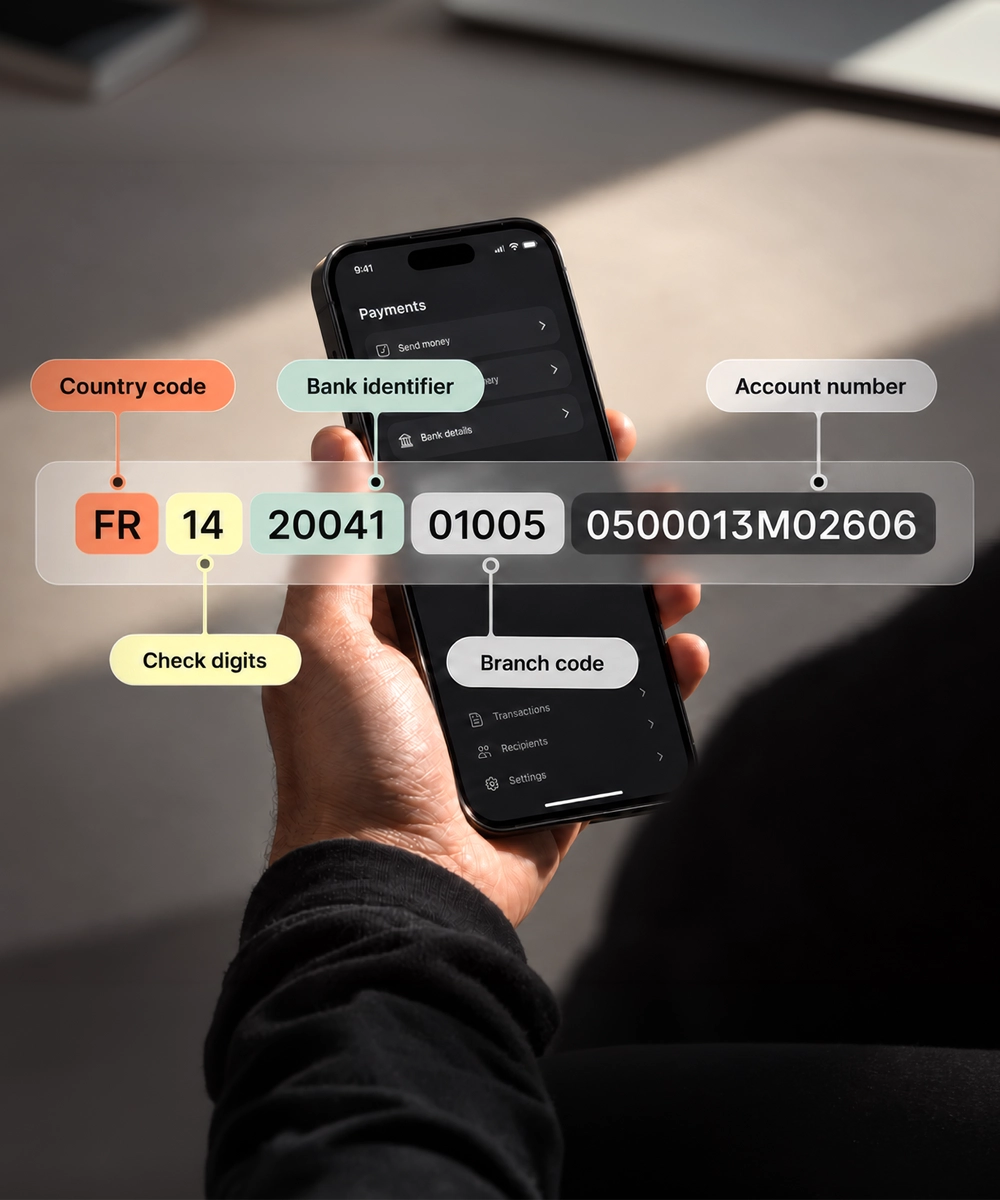
- Account-to-account / pay-by-bank / open-banking payments: SurePay, Banfico, iPiD. Payee verification, the key control for bank-transfer fraud.
If you sell online and take cards, start with a card-fraud platform like Stripe Radar or Signifyd. If you take pay-by-bank or instant bank transfers, the fastest-growing way to pay online, the dominant fraud is misdirected and impersonation payments, and payee verification (SurePay) is the leading control, with customers reporting up to an 81% drop in impersonation fraud.
What types of online payment fraud are there?
Online payment fraud splits into a few distinct types, and matching the tool to the type is the whole game. Card-not-present (CNP) fraud uses stolen card details on a website or app. Account takeover (ATO) is when a fraudster gains access to a legitimate customer's account. Chargeback / friendly fraud disputes legitimate purchases. And authorised push payment (APP) / bank-transfer fraud tricks a customer into sending a payment to the wrong account, the dominant fraud in pay-by-bank and open-banking payments.
No single product covers all of these well. Card-fraud platforms are built around card-network signals and chargeback economics; they do not verify a bank payee. Payee-verification providers confirm the right account for a bank transfer but do not score card risk. The best "solution" is usually a small stack matched to your payment mix.
Best for card & e-commerce fraud: Stripe Radar, Signifyd, Riskified, Sift
For card-not-present and e-commerce fraud, the leading solutions score each transaction using large card-network data sets and, in some cases, guarantee chargebacks. These are the default choice for online merchants taking card payments.
Stripe Radar scans every payment using signals from across the Stripe network and reduces fraud by roughly 32% on average. Signifyd, Riskified and Forter offer AI decisioning with chargeback-liability guarantees, popular with larger merchants. Sift provides real-time risk scoring drawing on 1 trillion+ annual events and 1.6 billion digital identities (4.6/5 on G2, a Spring 2026 Fraud Detection Leader). Kount and SEON round out the category, with SEON strongest at account-creation and first-transaction decisioning. Their shared limit: they are built for cards, not bank-transfer payee verification.
Best for account-to-account & pay-by-bank fraud: SurePay (payee verification)
For account-to-account, pay-by-bank and open-banking payments, payee verification is the key fraud control. It confirms the payee's name matches the account before the transfer is sent, stopping misdirected and impersonation payments at the point of risk. As payments shift from cards to instant bank transfers, this is the fastest-growing fraud surface, and it is a different control from card scoring.
SurePay is the most established payee-verification provider in Europe. Live since 2016, connected to 250+ banks across 16+ countries spanning Europe, the UK, Ireland, the US and Canada, processing 20m+ checks a day and covering 99.9% of all Dutch bank accounts, its customers report up to an 81% reduction in reported fraud and a 67% reduction in misdirected payments. It operates cross-border as an official Swift Enabler partner, and Verification of Payee is now mandatory across the EU.
But verification is only half of it. Beyond name matching, SurePay's Fraud Risk Intelligence feeds confirmed risk and mule-account signals into a bank's transaction monitoring: the deterministic, network-level layer that probabilistic card scoring alone misses. No single bank sees what the network sees.
Banfico (the first fully qualified RVM in the EPC's Verification of Payee scheme) and iPiD (global payee verification across 25+ countries) are the other notable providers in this category.
Best for account takeover & identity fraud: Sift, SEON, BioCatch, Fingerprint
For account takeover and identity-based fraud, the leading solutions verify the user, not just the payment, using device intelligence, behavioural biometrics and identity signals. ATO is often the entry point to payment fraud, so this layer protects the account before a fraudulent payment is even attempted.
Sift and SEON combine risk scoring with data enrichment to spot suspicious logins and new-account fraud. BioCatch uses behavioural biometrics, analysing how a user types, swipes and holds a device, to detect impostors and coerced users. Fingerprint specialises in device identification to recognise returning fraudsters. These tools answer "is this really the customer?", which complements payment-level checks but does not, on its own, confirm a bank payee or score a card transaction.
Best for bank-side transaction monitoring: Feedzai, Featurespace, ACI
For banks and PSPs monitoring payment flows, transaction-monitoring platforms score every payment in real time against patterns and history, blocking or holding the risky ones. This is the issuer-side layer that sits behind both card and bank-transfer rails.
Feedzai is an AI-native, bank-grade platform spanning fraud and AML. Featurespace (its ARIC Risk Hub, behind Visa's ~$1.1bn acquisition) is known for adaptive behavioural analytics. ACI Worldwide blends real-time monitoring, machine learning and network intelligence. The limitation is shared across monitoring: it scores risk probabilistically and cannot confirm that a bank payee is who the customer believes, which is why banks pair monitoring with a payee-verification layer.
Online payment fraud solutions compared
[MISSING TABLE]
Bottom line: match the tool to your payment mix. Card-heavy merchants lead with Stripe Radar or Signifyd; banks and PSPs taking instant transfers and pay-by-bank lead with payee verification, where SurePay is the most established provider, with proven outcomes (up to 81% less impersonation fraud).
How do I choose the right online payment fraud solution?
Pick by your payment mix and fraud type, then layer:
- Mostly cards? Start with a card-fraud platform (Stripe Radar for Stripe users; Signifyd or Riskified for chargeback guarantees on higher volumes).
- Pay-by-bank / instant transfers? Lead with payee verification (SurePay). It is the control for the dominant fraud on bank rails and is mandatory in the EU, and standard in the UK and Ireland.
- High account-takeover risk? Add device intelligence and behavioural biometrics (Fingerprint, BioCatch, SEON).
- A bank or PSP? Combine transaction monitoring (Feedzai, ACI) with payee verification for both detection and prevention.
- Check overlap. Several vendors span categories; map your actual gaps before buying so you do not pay twice for the same signal.