I was at Sibos in (rainy) Miami, alongside 9,999 fellow practitioners from the world of finance. Whether the session was about infrastructure, treasury, or what banks actually owe their customers, the same point kept coming back: a payment is never the goal. It is the critical link in someone’s business outcome. If that link fails, the outcome fails with it.
Here are a few other thoughts that I took away.
Speed is largely a solved problem. Now, the culprit is almost always data.
Swift’s own data makes this clear with 75% of cross-border payments reaching the destination bank within 10 minutes. The rail delivers but the last mile doesn’t. The gap between the payment arriving at the destination bank and the money actually landing in the right account can account for up to eighty percent of the total payment time.
A mismatched name, or an inconsistent identifier, or an incomplete beneficiary detail: any of those is enough to trigger a manual review queue, a rejection, or a delay, after the payment has already left the sender. The cost of fixing a failed payment is estimated to run between fifty and one hundred euros per transaction and often more. By the time the problem surfaces, it’s already too late. The payment is out. The error is downstream. And someone has to spend time chasing it rather than the money moving cleanly through. We’ve spent years optimising the rail, and the bulk of the delay was never on the rail.
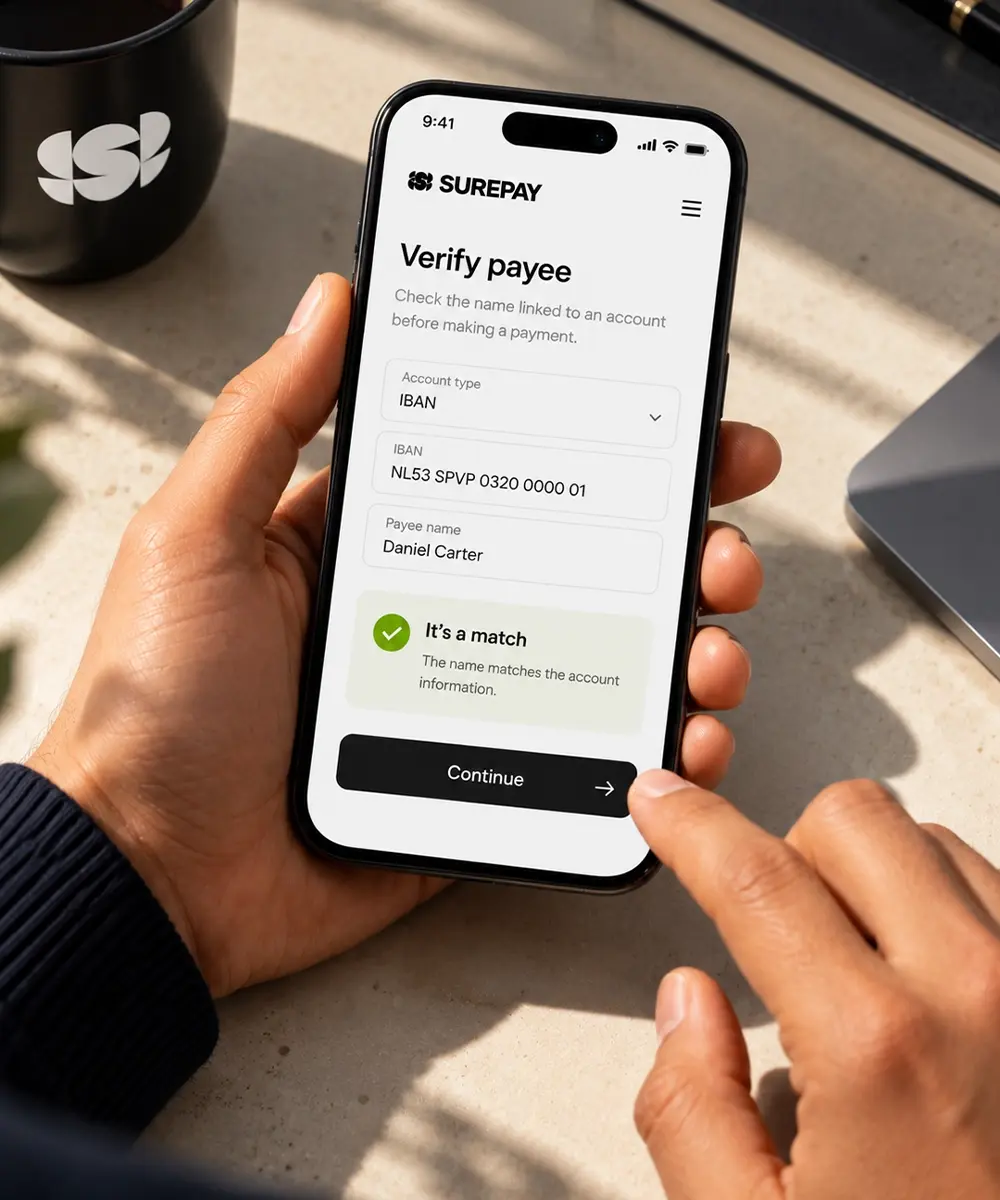
In response, Swift has launched a Payment Pre-validation Service, to allow banks to verify payee account details before an international payment is sent, using anonymised data from 9 billion annual payment messages and 4 billion accounts. For a network of Swift’s scale to build this, the signal is clear: the data problem is real, it’s expensive, and fixing it before execution is the only way to solve the problem.
Be certain, before the money moves.
The conversation around this kept coming to the fact that verification at the point of initiation, confirming that the payee and account actually match before you send, means one of two things happens—either the payment doesn’t go through with an error in it, or it arrives and is credited straight through.
It’s perhaps a surprisingly simple idea, confirming before you commit, but the industry has historically done it the other way around. Send first, investigate later if something breaks.
It’s only becoming more complex.
As with any conference in 2026, agentic payments were everywhere. AI acting on behalf of businesses and consumers, initiating transactions autonomously, at speed. Our Chief Innovation Officer Marcel Rienties, who was also attending, noticed a specific gap. Every agent protocol being discussed had thought carefully about who the agent acts for and what it’s authorised to spend. None of them had a clear answer to a simpler question: who verifies the recipient, the agent or a human?
That’s not a small oversight in an agentic world where there’s no human pausing before hitting send. The agent pays, which means if verification doesn’t happen before execution, it doesn’t happen at all. And there’s no regulatory framework catching this yet. The EU AI Act covers AI systems broadly but doesn’t address payment-specific accountability. In the US it’s even less defined. Liability for agent-initiated transactions is largely unsettled and as I noted in my takeaways from Nacha’s May conference, we can expect court cases to set the precedent. The regulation is lagging significantly behind the deployment.
We’ve seen this film before. A2A payments scaled fast, liability frameworks came later, and APP fraud filled the gap. Agentic payments have the same shape: speed and autonomy first, guardrails after. The industry is building a much faster motorway. The crash barriers need to keep up.
Certainty eats speed for breakfast.
I think this is the shift that I was hearing. Customers don’t just want payments to be fast, especially at the cost of losing money and time. As an industry we need to do better at making sure that payments are a guarantee, and not a risk for any business where cash flow, supplier relationships, or customer trust depends on that money landing correctly, a guarantee is worth more than speed alone.
The industry has spent a decade making payments faster. The next chapter is making them certain. That’s the outcome we’re building toward.