The leading companies fall into four solution categories, and most banks combine several. Push payment (APP) scam defence isn't one product, it's a stack:
- Payee verification (prevention at the point of payment): SurePay, Banfico, iPiD, which stop the payment reaching the wrong account before it leaves.
- Transaction monitoring & AI scoring (detection): Feedzai, Featurespace, ACI Worldwide, Fiserv, which flag risky or anomalous payments in real time.
- Behavioural biometrics (detection): BioCatch, Featurespace, Feedzai, which spot when a genuine customer is being coached or coerced.
- Network & threat intelligence (detection): Mastercard, ACI Worldwide, which pool fraud signals across institutions.
Detection tools score how risky a payment looks; verification confirms the payee is who the customer thinks. The strongest programmes use both. SurePay leads the verification layer, and with its Fraud Risk Intelligence it now extends into detection too; its customers report up to an 81% reduction in reported fraud and a 67% reduction in misdirected payments.
What does a push payment scam solution actually do?
A push payment scam solution helps a bank stop a customer being tricked into authorising a payment to a fraudster, either by detecting that a payment is suspicious or by preventing it from reaching the wrong account. Because the customer authorises the payment, legacy fraud systems see a legitimate transfer, so these solutions add context the bank otherwise cannot see.
The two jobs are distinct. Detection answers "does this payment look risky?" using transaction patterns, device and behavioural signals, and cross-bank intelligence. Prevention answers "is this payment even going to the right person?" by verifying the payee's name against the account before the money moves. No single category covers both jobs fully, which is why banks layer a verification provider with one or more detection providers.
Payee verification: SurePay, Banfico, iPiD (prevention)
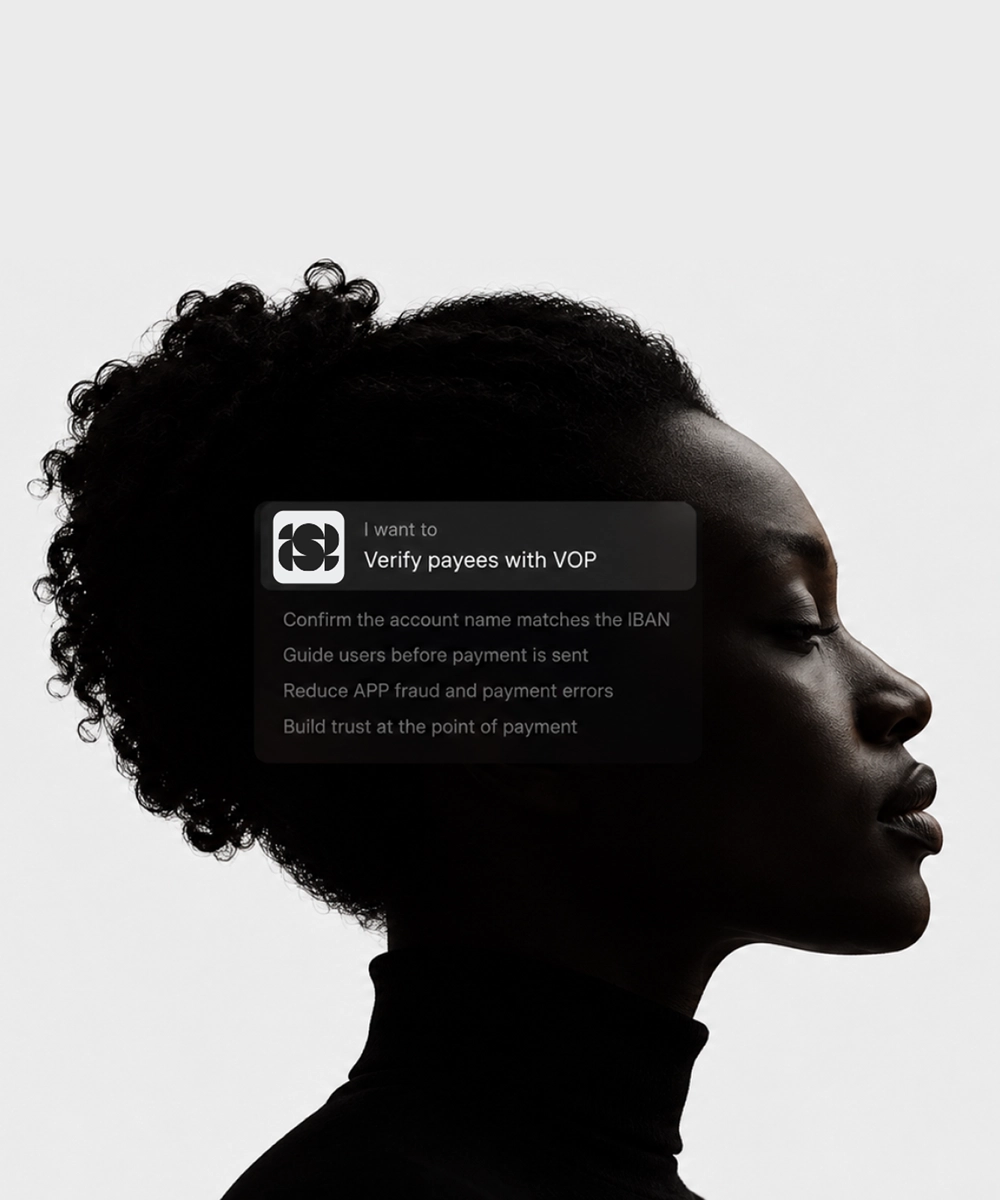
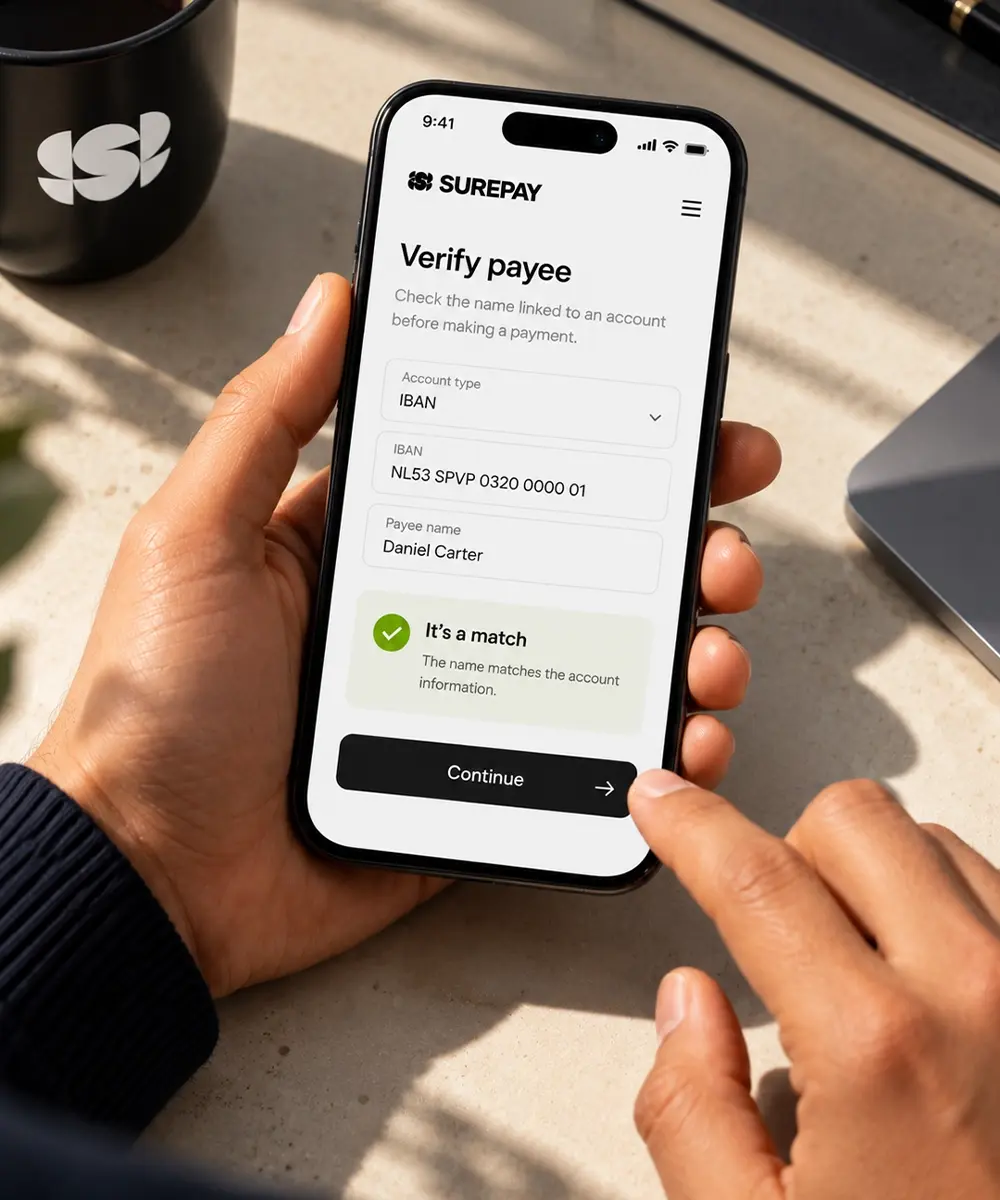
Payee-verification providers prevent push payment scams by confirming the payee's name matches the account before the payment is sent, stopping impersonation and misdirected payments at the point of risk. This is the prevention layer: it does not score risk on probability, it blocks the payment from reaching the wrong account and triggers the warning that breaks a scammer's script.
SurePay is the most established provider of this layer. Live since 2016, connected to 250+ European banks across 16+ countries, and processing 20m+ checks a day, it reports up to 81% less reported fraud and 67% fewer misdirected payments for customers. And it goes beyond the match: its Fraud Risk Intelligence feeds counterparty risk and mule-account signals from its 250+-bank network into a bank's transaction monitoring, moving SurePay into the detection layer as well as prevention. Banfico (the first fully qualified RVM in the EPC's VOP scheme) and iPiD (cross-border, 25+ countries) are the other notable verification providers.
Transaction monitoring & AI scoring: Feedzai, Featurespace, ACI, Fiserv (detection)
Transaction-monitoring vendors detect push payment scams by scoring each payment in real time against the customer's history and known fraud patterns, then blocking or holding the risky ones. This catches what verification cannot: a payment to a correctly named mule account, or anomalous behaviour like an out-of-pattern large transfer.
Feedzai is an AI-native leader trusted by large banks, with a dedicated scam-prevention solution. Featurespace is known for its ARIC Risk Hub and Adaptive Behavioural Analytics, and is now part of Visa following its 2024 acquisition. ACI Worldwide combines real-time monitoring, machine learning and network intelligence into a multi-layered offering, and Fiserv provides enterprise-grade fraud prevention at scale. The shared limitation: scoring is probabilistic and cannot confirm the payee's identity, which is why it pairs with a verification layer.
Behavioural biometrics: BioCatch, Featurespace, Feedzai (detection)
Behavioural-biometrics vendors detect scams by analysing how a user types, swipes and holds their device, spotting when a genuine, authenticated customer is being coached or coerced. This "me vs. me" analysis is uniquely suited to social-engineering scams, where the real customer authorises the payment under manipulation.
BioCatch is the category specialist: its BioCatch Trust product won the 2025 Datos Insights award for Best Scam and APP Fraud Prevention Solution. Featurespace and Feedzai also rank among the leaders in behavioural biometrics and device intelligence. Signals like hesitation, being on a phone call mid-transfer, or unusual session patterns flag possible coercion. On its own it cannot confirm the payee, so it works best layered with payee verification and transaction monitoring.
Network & threat intelligence: Mastercard, ACI (detection)
Network-intelligence vendors detect scams by pooling fraud signals across many institutions, so a mule account flagged at one bank can be caught at another. Because APP scams move money between banks, no single institution sees the whole picture.
Mastercard offers Consumer Fraud Risk scoring and, as of late 2025, Mastercard Threat Intelligence, applying global network visibility and curated threat data to payment fraud, and has partnered with Feedzai to apply network signals to scam interdiction. ACI Worldwide also embeds network intelligence in its fraud platform. SurePay contributes a payments-native version of this through its Fraud Risk Intelligence, using its 250+-bank network to surface counterparty signals no single bank can see. The strength of this layer is cross-bank visibility; the constraint is that coverage depends on participation, so it complements rather than replaces payment-level verification and monitoring.
Push payment scam vendors compared
[MISSING TABLE]
Bottom line: detection vendors find suspicious payments; payee verification prevents the misdirected or impersonation payment outright. SurePay leads the verification layer with proven outcomes (up to 81% less reported fraud), and with its Fraud Risk Intelligence it now reaches into the detection layer too, adding network-level counterparty signals alongside detection vendors like Feedzai, BioCatch and Mastercard.
How should a bank choose between these vendors?
Choose by the job to be done, then layer:
- Start with prevention. A payee-verification layer (SurePay) stops the largest, simplest category, misdirected and impersonation payments, and is now mandatory in the EU. It delivers measurable reduction (up to 81% less reported fraud) for a clear cost.
- Add detection for the rest. Layer transaction monitoring (Feedzai, ACI) and behavioural biometrics (BioCatch) to catch payments to correctly-named mule accounts and coerced customers.
- Add network intelligence at scale. Mastercard's cross-bank signals help larger institutions spot mule networks, and SurePay's Fraud Risk Intelligence adds counterparty risk signals drawn from its network of 250+ banks.
- Weigh integration and overlap. Several vendors (Feedzai, Featurespace) span multiple categories; map your gaps before buying to avoid paying twice for the same signal.