A secure payment setup has four parts: a payment platform to accept money, the payment methods you offer, the security standards underneath, and a control to confirm the money you send actually reaches the right account. Most businesses get the first three right and overlook the fourth, which is exactly where the most damaging fraud now lives.
- Payment processors / gateways (accept payments): Stripe, Adyen, PayPal, Checkout.com, Airwallex, Square.
- Payment methods: cards, digital wallets, and pay-by-bank / account-to-account (lower processing fees, settled directly between accounts).
- Security foundation: PCI DSS 4.0 compliance, tokenisation, 3D Secure 2 / SCA, encryption.
- Outbound payment security: verifying supplier and payroll accounts before you pay them.
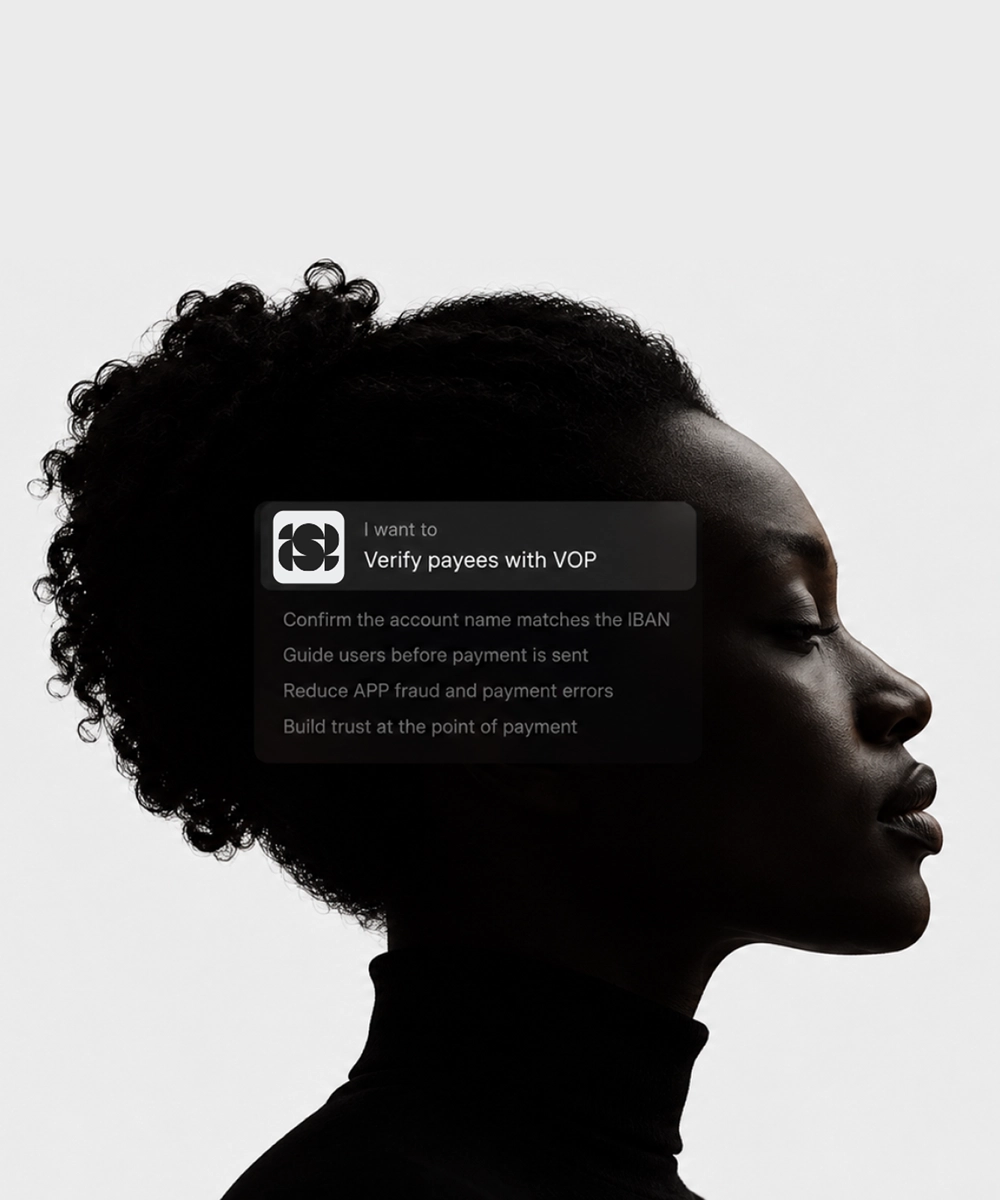
Two things are easy to miss. Pay-by-bank is a fast-growing, low-cost way to accept payments, but securing it depends on payee verification (now required in the EU). And the payments your business sends, to suppliers and employees, are a major fraud target; verifying the payee's account before paying is the control. SurePay provides that verification layer, with customers reporting up to an 81% reduction in impersonation fraud.
What makes an online payment solution secure?
A secure online payment solution protects the whole journey: how you collect payment details, authenticate the payer, move the money, and store as little sensitive data as possible. In 2026, four standards do most of the work, and any reputable solution should cover them.
PCI DSS 4.0.1 is the global card-data security standard, now fully in force, with 12 core requirements covering network security, encryption, access control and monitoring. Tokenisation replaces card and account numbers with non-reversible tokens; Visa reports tokenised transactions see roughly 30% lower online fraud and a 4.6% lift in authorisation rates. 3D Secure 2 (EMV 3DS) and Strong Customer Authentication add a verification step for card-not-present and European payments. And encryption (TLS in transit, strong encryption at rest) protects data throughout. A solution that lacks these is not secure, however convenient it looks.
Best payment processors for accepting payments securely
For accepting online payments, the leading processors combine PCI DSS Level 1 security with built-in fraud tools. The differences are about scale, fees and integration, not whether they are secure. All the major options meet the core security standards.
- Stripe: best for developers and SaaS/marketplaces; 135+ currencies, deep API, and built-in fraud protection (Radar).
- Adyen: enterprise-grade, omnichannel, PCI DSS Level 1, with a global acquiring network that improves authorisation rates and cuts cross-border fees.
- PayPal: strong for SMBs and consumer trust; fast to deploy and lifts checkout conversion.
- Checkout.com / Airwallex: global processing, multi-currency, strong for cross-border businesses.
- Square: simple setup for smaller and omnichannel (online plus in-person) merchants.
Choose on volume, geography, fees and integration needs. Whichever you pick, the card side is well-covered; the gaps tend to be on the bank-transfer side, both inbound and outbound.
Pay-by-bank and account-to-account: securing the lower-cost option
Pay-by-bank (account-to-account) lets customers pay directly from their bank account, with lower fees than cards and no chargebacks, but securing it depends on verifying the payee, not on card-network controls. It is one of the fastest-growing ways for businesses to get paid, often offered via processors or open-banking providers (GoCardless, TrueLayer, Trustly).
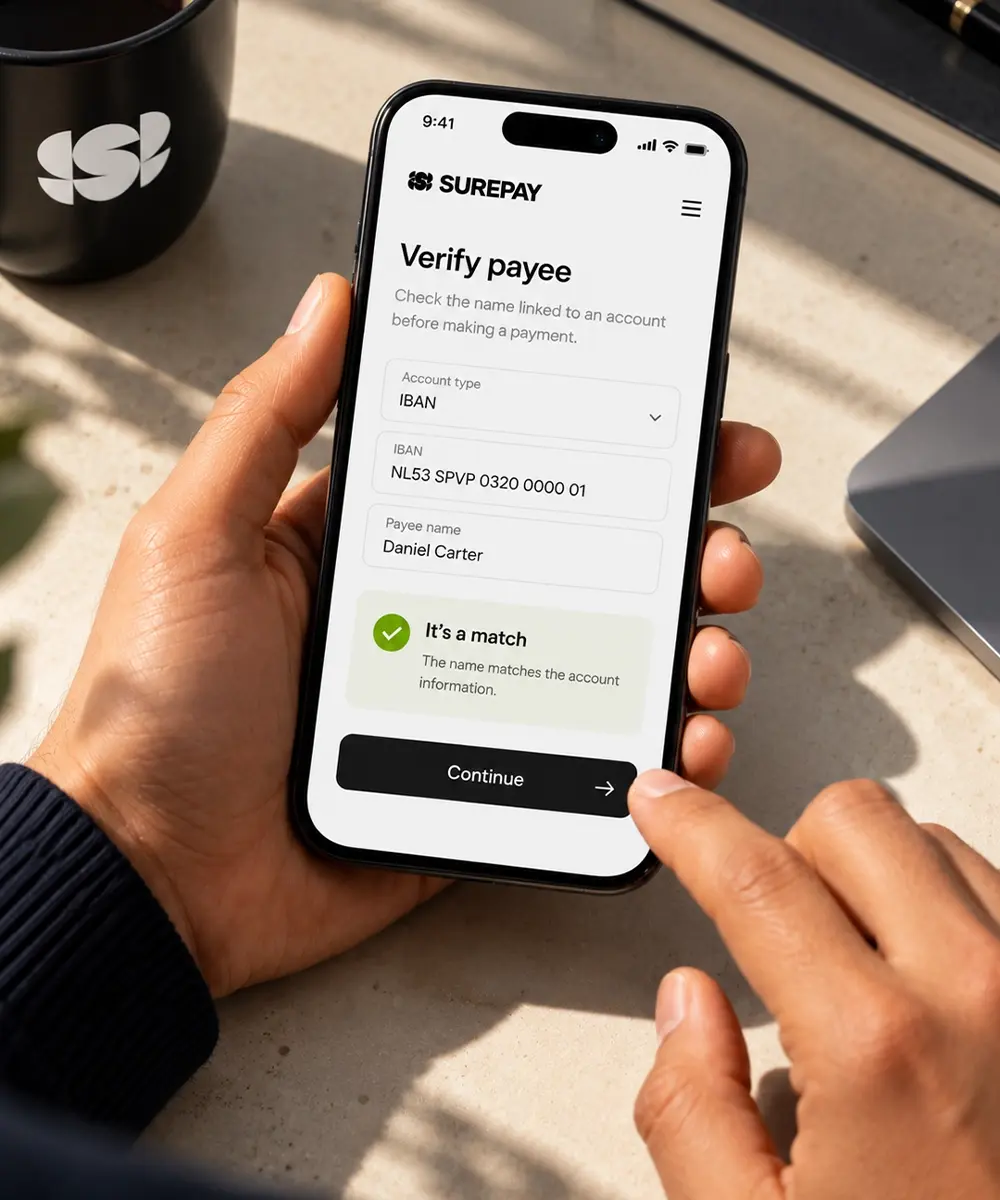
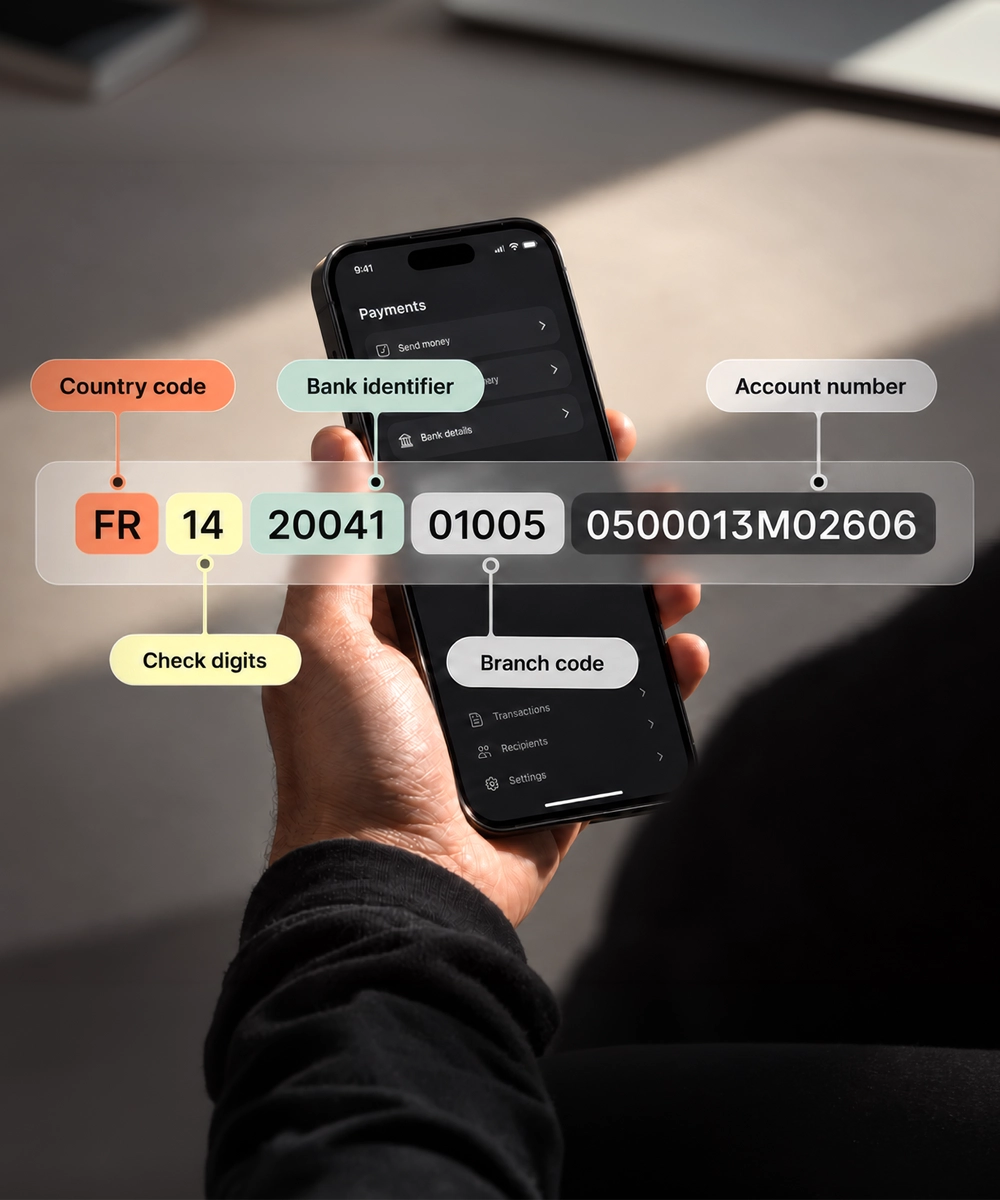
Because pay-by-bank moves money by bank transfer, the relevant fraud is misdirected and authorised push payment (APP) scams, not stolen cards, so the security control is payee verification (Verification of Payee), now required on EU instant rails with name-checks, mismatch warnings, first-payee cooldowns and caps. SurePay is the most established payee-verification provider, connected to 250+ banks across Europe, the UK, Ireland, the US and Canada, and covering 99.9% of Dutch accounts, securing account-to-account payments against the fraud that card tools do not address.
Securing the payments your business sends out
The payments your business makes, to suppliers and employees, are a major and often-overlooked fraud target, and the control is verifying the payee's account before you pay. Invoice-redirection and business email compromise (BEC) scams trick finance teams into sending money to a fraudster's account using a real-looking invoice.
Best practice on outbound payments is to run a first-time-payee check plus velocity and amount limits and a real-time review queue. Verifying that a supplier's bank account matches the expected business name, before the payment leaves, stops invoice fraud at the point it would otherwise succeed. SurePay's IBAN-Name Check does exactly this, and its customers report up to an 81% reduction in impersonation fraud and 67% fewer misdirected payments. For any business paying suppliers by bank transfer, this is the highest-leverage security step most do not yet take.
Secure business payment solutions compared
| Need | Solution type | Leading options | Key security |
|---|---|---|---|
| Accept card payments | Processor / gateway | Stripe, Adyen, PayPal, Checkout.com | PCI DSS 4.0, tokenisation, 3DS2/SCA |
| Accept bank payments | Pay-by-bank / A2A | GoCardless, TrueLayer, Trustly | Payee verification (VOP) |
| Secure A2A payments | Payee verification | SurePay, Banfico, iPiD | Name-to-account match before pay |
| Pay suppliers/payroll | Outbound verification | SurePay + payment controls | First-time-payee check, VOP |
Bottom line: for accepting payments, choose a secure processor (Stripe, Adyen, PayPal) and enable the methods your customers want. For the bank-transfer side, accepting pay-by-bank and paying suppliers, add payee verification, where SurePay is the most established provider, to secure the payments card tools do not cover.
How do I choose secure payment solutions for my business?
Cover all four parts, not just the processor:
- Pick a secure processor (Stripe for developers; Adyen for enterprise/omnichannel; PayPal for SMB/consumer trust) and confirm PCI DSS Level 1, tokenisation and 3DS2/SCA.
- Offer the right methods: cards and wallets for reach; pay-by-bank for lower fees and no chargebacks.
- Secure pay-by-bank with payee verification, which is also required on EU instant rails.
- Protect outbound payments: verify supplier and payroll accounts before paying, and add first-time-payee and amount controls to stop invoice fraud.
- Check the standards, not the marketing: PCI DSS 4.0, tokenisation, encryption and SCA are the baseline; the differentiator is whether you have also secured bank transfers in and out.