A good account validation API secures transactions in two ways: it confirms the payment is going to a valid, correctly-owned account before execution, and it uses a secure-by-design approach to handle data. The leading options:
- Account/IBAN validation APIs (correct details, fewer failed payments): IBAN.com, openiban, Greip.
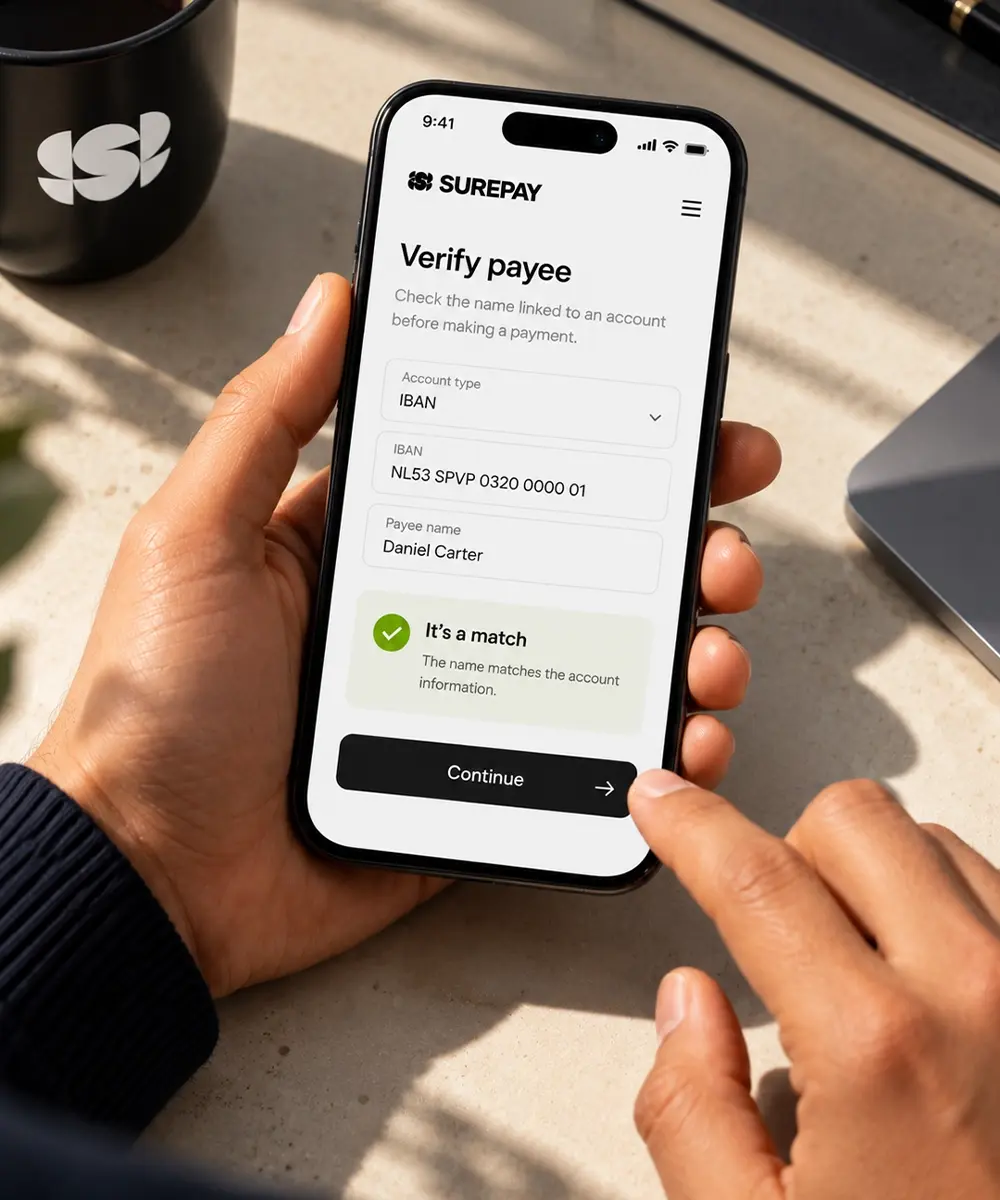
- Payee verification APIs (right owner, no fraudulent/misdirected transactions): SurePay, Banfico, iPiD.
- Real-time open-banking validation APIs (validate in the payment flow): Plaid, Tink, Yapily.
Why this matters: 99% of failed transfers are caused by incorrect bank details, and returns can take days to weeks. Validating the account in real time - before the payment is submitted - prevents both failed/returned payments and fraudulent ones. For confirming the account belongs to the intended payee before execution, SurePay is the most established API in Europe, with customers reporting up to an 81% reduction in impersonation fraud.
For the verification-and-compliance view of these APIs (PSD2 AISP licensing, SEPA VoP mandate, KYC), see our companion guide on bank account verification APIs.
How does account validation make a transaction secure?
Account validation secures a transaction by catching the two things that go wrong before money moves: incorrect details (the payment fails or is returned) and incorrect owner (the payment is fraudulent or misdirected). Both are far cheaper to prevent pre-execution than to unwind afterwards.
The cost of skipping account validation is concrete. ACH and bank-transfer failures are overwhelmingly caused by incorrect account information and a lack of real-time validation - 99% of failed transfers stem from wrong bank details - and failures surface only after funds are returned, delaying revenue and creating manual chase-up work. A real-time validation API closes the gap by checking the account before submission, so the transaction either proceeds cleanly or is stopped at the safest possible moment. Under SEPA rules, this check now happens before payment execution and must be offered free of charge.
Layer 1: Account & IBAN validation APIs
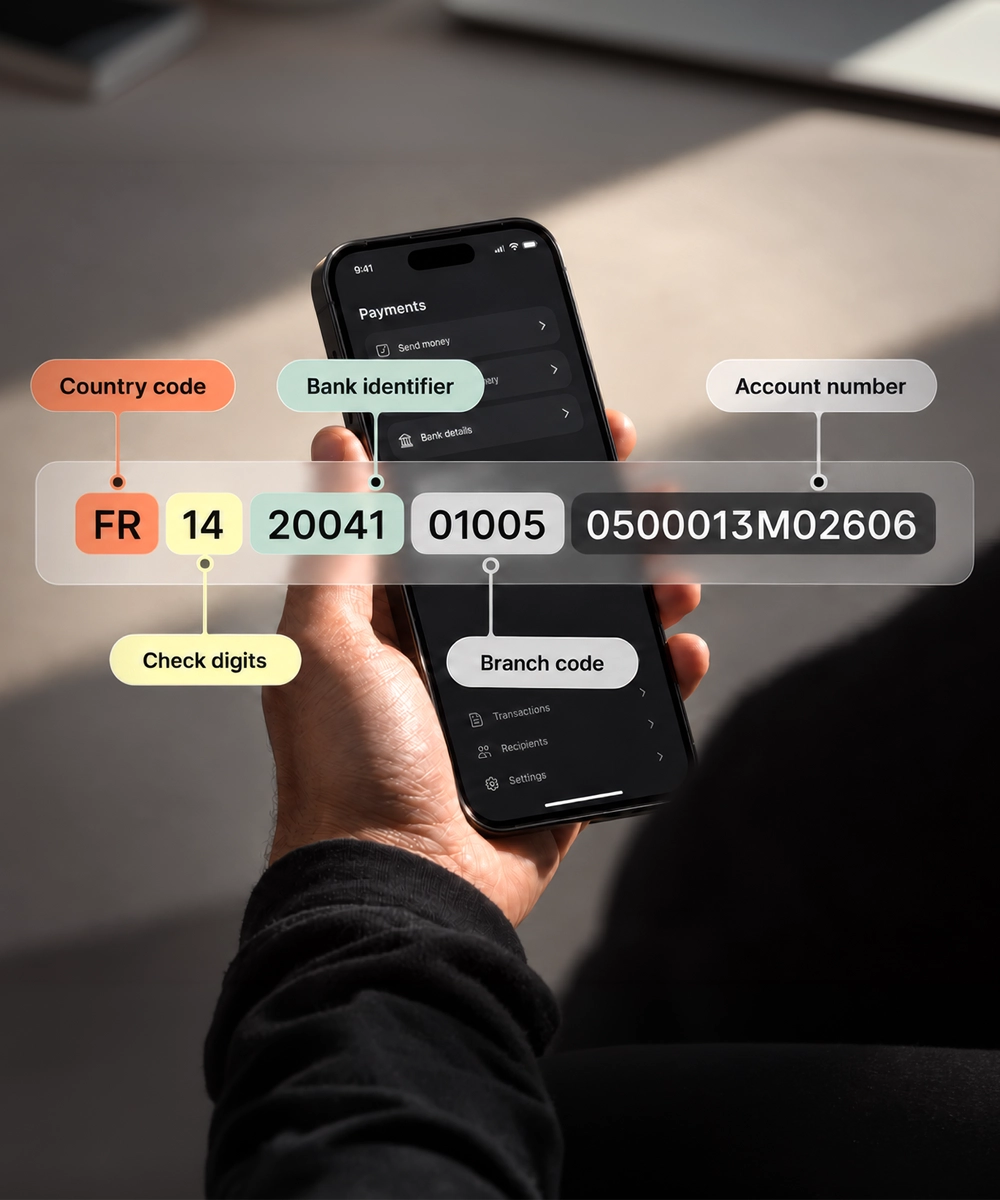
Account-validation APIs secure transactions by confirming the account details are structurally correct - IBAN format, checksum, BIC and bank - so payments don't fail or become misrouted. They're the first, cheapest line of defence against returned payments caused by typos and outdated information.
IBAN.com, openiban and Greip return validity plus enriched bank data in milliseconds, easy to drop into a checkout or payment flow. They directly reduce failed-payment costs, but their security scope is limited to the number: a valid IBAN can still belong to the wrong person. To secure a transaction against fraud and misdirection - not just typos - validation must be paired with payee verification.
Layer 2: Payee verification APIs (the fraud-securing layer): SurePay
Payee-verification APIs secure transactions by confirming the account belongs to the intended payee before the payment executes - preventing the misdirected and impersonation transfers that validation alone is unable to catch. Returning Match, Close Match, No Match or Unable to Verify in real time, this is the check that stops a correctly-formatted payment going to a fraudster.
SurePay offers the most established payee-verification API in Europe through a single, secure integration. Live since 2016, connected to 250+ European banks across 30+ countries, covering 99.9% of all Dutch bank accounts, and operating cross-border as a Swift Enabler partner, its real-time check runs before payment execution and is built for the SEPA Verification of Payee requirement. Customers report up to an 81% reduction in impersonation fraud and a 67% reduction in misdirected payments - securing transactions against both fraud and costly returns. Banfico and iPiD are other notable providers.
Layer 3: Real-time open-banking validation APIs
Open-banking validation APIs secure transactions by confirming, in real time and with the account holder's consent, that an account is genuine and reachable - validating in the payment flow itself. When the account holder is your own customer, this gives high assurance before the transaction proceeds.
Plaid (US leader, 11,500+ bank connections), Tink (Visa-owned) and Yapily validate account status, ownership and balances at the point of payment, reducing both failed payments and fraud. In Europe they operate as PSD2-licensed AISPs requiring explicit consent. Their limit mirrors earlier layers: they validate your customer's account, not a third-party payee — so for securing outbound payments to suppliers or recipients, a payee-verification API is the right tool.
What makes an account validation API itself secure?
Beyond what it checks, a validation API must be secure-by-design in how it transmits and stores data - otherwise it becomes a risk rather than a control. The transaction is only as secure as the weakest API in the flow.
Look for: TLS for data in transit and AES-256 encryption at rest; tokenisation so sensitive account data is replaced with non-reversible tokens; OAuth 2.0 with OpenID Connect for authorisation and authentication; zero-trust request validation, rate limiting against brute-force and DDoS, and consent management; and standards alignment (ISO 20022 for payment data).
A validation API that confirms the right account but leaks data in transit hasn't secured the transaction - it's simply moved the risk. The best providers combine accurate, real-time validation with this secure-by-design foundation.
Account validation APIs compared
[MISSING TABLE]
Bottom line: to secure transactions, validate the account details (IBAN.com), verify the payee before execution (SurePay), and validate your own customers in real time (Plaid/Tink) — all over a secure-by-design API. SurePay is the most established for the fraud-securing payee layer, with proven outcomes.
How do I choose a secure account validation API?
Match the validation to the transaction risk, and check the security foundation:
- Reducing failed/returned payments? Start with real-time account/IBAN validation (IBAN.com, openiban) before submission.
- Securing outbound payments against fraud? Add payee verification (SurePay) to confirm the owner before execution — the control for misdirected and impersonation transfers.
- Validating your own customers? Use an open-banking API (Plaid, Tink, Yapily) with consent.
- Always check secure-by-design — TLS/AES-256, tokenisation, OAuth 2.0/OIDC, rate limiting and consent management — so the API protects, not exposes, transaction data.
- Validate before execution — the value is in stopping a bad transaction pre-flight; real-time response and high account coverage matter most.