Two actions are required in order to verify an IBAN for a transaction. Firstly, validate that the IBAN is structurally correct, and secondly, confirm the account actually belongs to the person or business that you're paying. Validation catches typos; payee verification catches fraud and misdirected payments - and for a real transaction, you want both.
In short:
- Validate the IBAN with a free checker (confirms format, checksum and bank).
- Confirm the bank/BIC the IBAN routes to.
- Verify the account holder's name matches the payee (Confirmation of Payee/Verification Of Payee).
- Double-check directly with the recipient for large or first-time payments.
A valid IBAN only means the number is well-formed; it does not confirm the account exists or who owns it. The step that actually protects a transaction is verifying the payee's name against the account, which is now mandatory for SEPA payments across the EU.
What does "verifying an IBAN" mean?
Verifying an IBAN for a transaction involves a two-step process, and they answer different questions. Validation checks the number is structurally correct with the right country format and a passing checksum. Payee verification checks ownership, ensuring that the account actually belongs to the intended payee.
Most free "IBAN checkers" only do the first. They confirm the number could be a real account and identify the bank, but they explicitly do not check whether the account exists or who holds it. For a transaction - especially a large or first-time one - that gap is exactly where errors and fraud occur, which is why the verification step matters as much as the validation step.
Step 1: Validate the IBAN's structure
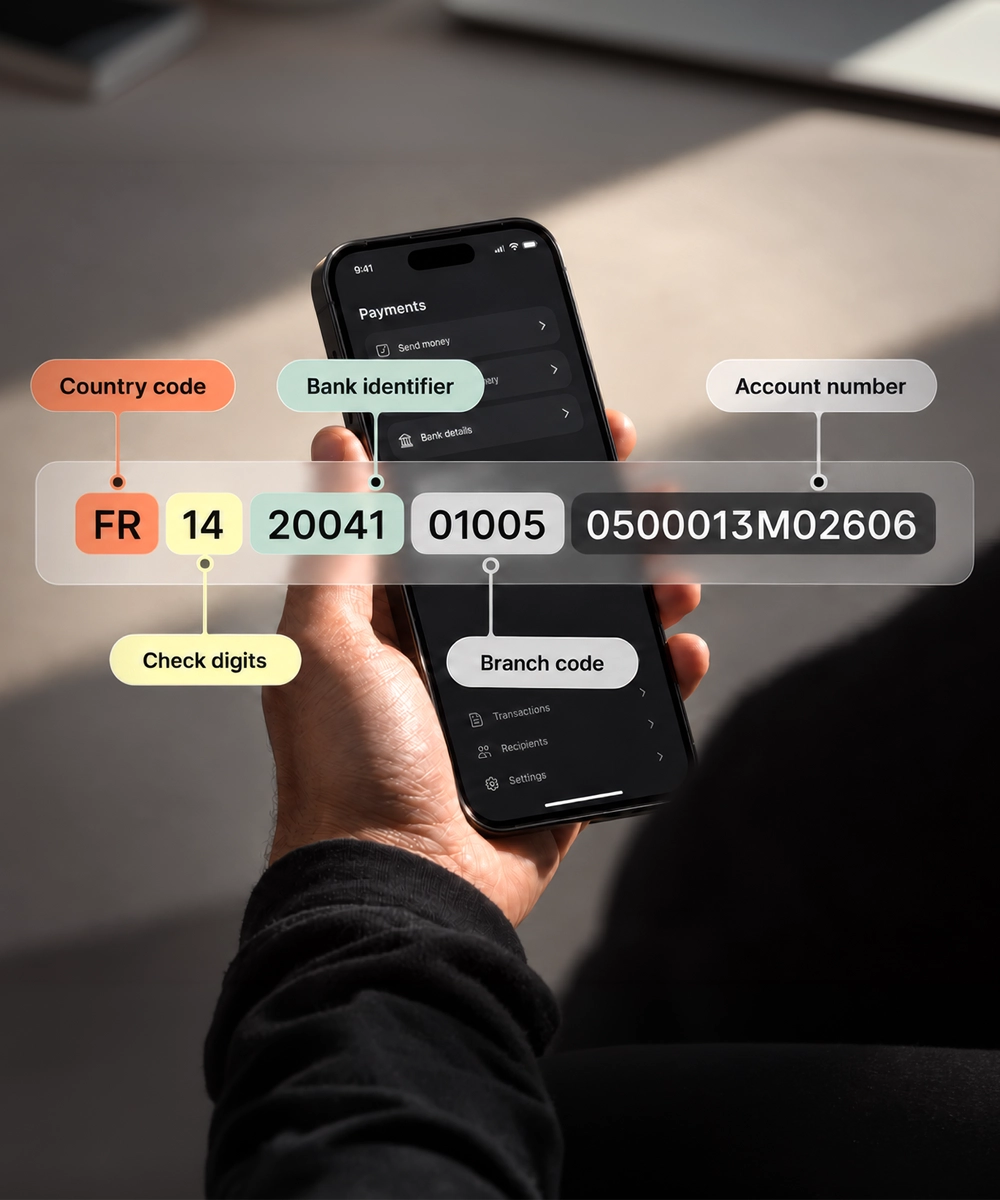
Enter the IBAN into a free validation tool to confirm it's correctly formatted - the right length and country code, with a passing checksum. IBAN validation uses the mod-97 algorithm (ISO 7064) to detect typos, transposed digits and other common input errors before a payment is submitted.
Free checkers like IBAN.com, Wise and openiban do this instantly. Tip: copy and paste the IBAN rather than typing it in order to avoid introducing errors. This step catches the most common cause of failed and returned payments - incorrect details - but it's only the first half of verification.
Step 2: Confirm the bank and BIC
A valid IBAN also tells you which bank and branch it routes to - check that the returned bank name and BIC/SWIFT code match where you expect the money to go. Validation tools retrieve and display the associated bank information, including bank name, address and BIC.
Confirming the correct BIC alongside a valid IBAN ensures the payment routes to the right recipient bank. If the bank name doesn't match what you'd expect for that payee (for example, an unfamiliar bank in a different country), treat it as a red flag and verify before sending.
Step 3: Verify the account holder's name (the step that matters most)
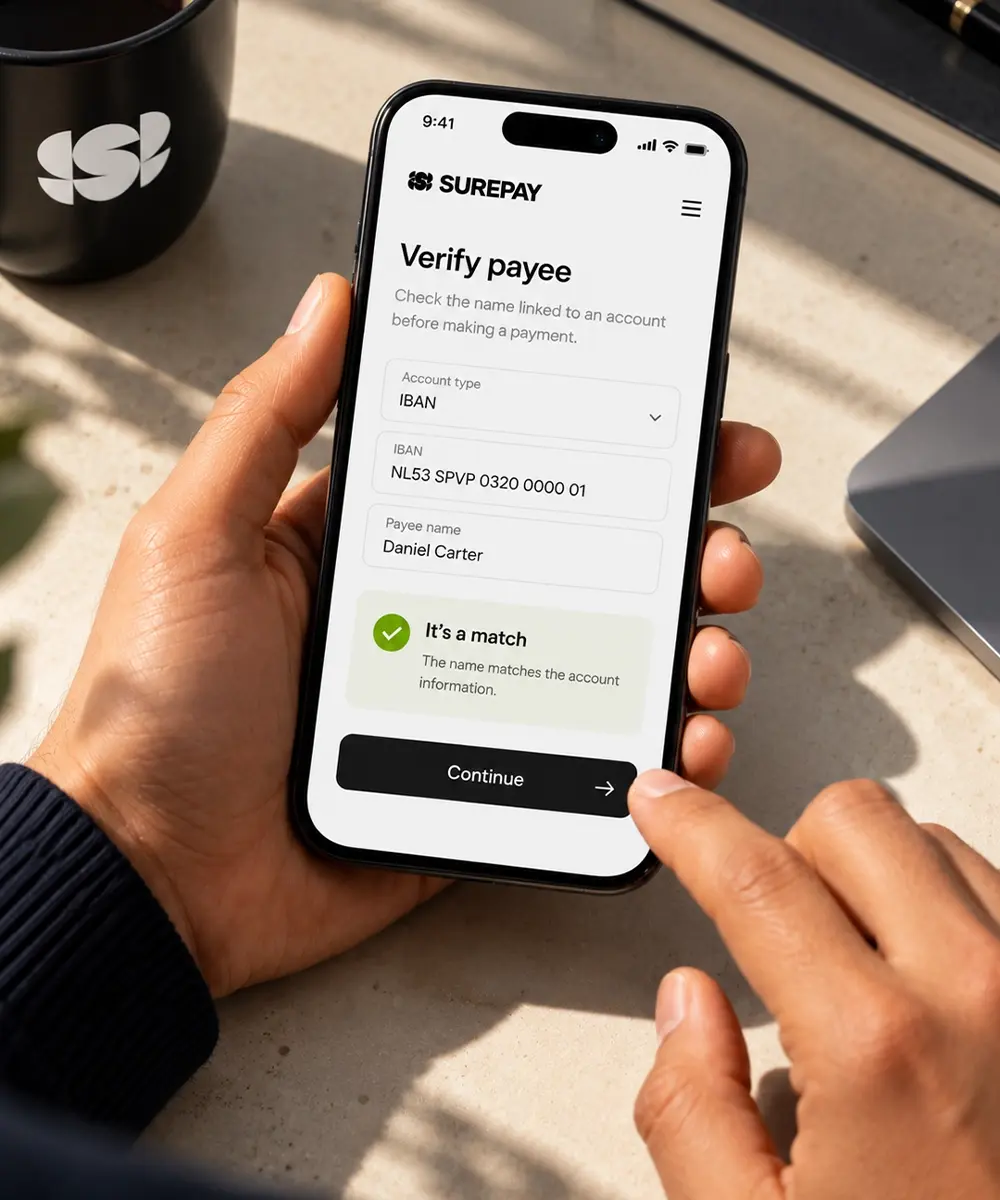
Confirm that the name on the account matches the intended payee - this is the only step that protects against fraud and misdirected payments, because a perfectly valid IBAN can still belong to the wrong person. This check is called Confirmation of Payee (CoP) or Verification Of Payee (VOP), and it returns Match, Close Match, No Match or Unable to Verify.
For consumers, most banks now run this automatically in online banking when you add a new payee. For banks, PSPs and businesses sending payments, it's done via a payee-verification API - and it has been mandatory for SEPA payments across the EU since 9 October 2025. SurePay is the most established provider, connected to 250+ European banks, covering 99.9% of Dutch bank accounts, with customers reporting up to an 81% reduction in impersonation fraud. A "No Match" result is your strongest signal to stop and check before the money moves.
Step 4: Double-check directly for large or first-time payments
For a large or first-time transaction, confirm the IBAN directly with the recipient through a trusted channel before sending. Validation and name-checking dramatically reduce risk, but a final human confirmation is worth it when the amount is significant.
Be alert to a common scam pattern: fraudsters intercept invoices and swap in their own IBAN. If a supplier's bank details have "changed," verify the new IBAN by calling a known contact number - not the one on the suspicious invoice or email. Only the recipient's bank can confirm the correct account details with certainty.
Validate vs verify: what each step actually does
[MISSING TABLE]
Bottom line: Validating an IBAN catches typos; verifying the payee catches fraud. For any transaction that matters, do both - and for SEPA payments, payee verification is now required.